BEGIN:VCALENDAR
VERSION:2.0
CALSCALE:GREGORIAN
METHOD:PUBLISH
PRODID://NYST//515276
BEGIN:VEVENT
DTSTAMP:20260530T122002
VTIMEZONE:America/New_York
DTSTART:20260427T200000Z
DTEND:20260427T040000Z
UID:515276
SUMMARY:Seeing the Whole Student: Guiding Effective Instruction
LOCATION:A zoom link will be sent to your email the night before the event.
DESCRIPTION:Seeing the Whole Student: Guiding Effective Instruction\n\n04/27/26 04:00 PM EST\n - 04/27/26 07:00 PM EST\Description:\nSeeing the Whole Student: Guiding Effective Instruction\nIntegrating system, classroom, and family & cultural data to support multilingual learners\nPresenters: Fausto Salazar and Jorge Silva \n\nWorkshop Description\nTeachers make decisions every day based on what they know about their students, but what if we could bring that knowledge together in a more intentional and powerful way? This session explores how to use multiple data sources to better understand and support multilingual learners across all content areas.\n\nParticipants will learn how to move beyond test scores and consider the whole student by combining system data (such as assessments and attendance), classroom data (including student work and engagement), and family and cultural information. Through practical examples and case studies, we will explore how these three data sources work together to inform instruction, promote equity, and build on students’ strengths.\n\nThis interactive workshop will provide strategies that are immediately applicable in any classroom, helping educators turn everyday information into meaningful instructional decisions.\n\nWho Is This Workshop For?\n\n K–12 teachers across all subject areas\n ENL/ESL and bilingual educators\n Special education teachers\n Instructional coaches and school leaders\n Any educator interested in better understanding and supporting multilingual learners\n\nNo prior experience with data analysis is required.\n\nBy the End of This Session, Participants Will:\n\n\n Identify three key types of data: system, classroom, and family/cultural information, and understand how each contributes to a fuller picture of the student\n Apply a data triangulation approach to better understand student strengths and needs\n Use student information to design instruction that supports language development and content learning\n Shift from a deficit-based perspective to an asset-based approach when interpreting student data\n Leave with practical strategies to use data in ways that are meaningful, manageable, and immediately applicable in their classrooms\n\n\n\n\n\Location:\nA zoom link will be sent to your email the night before the event. \n\n,
X-ALT-DESC;FMTTYPE=text/html:Seeing the Whole Student: Guiding Effective Instruction
04/27/26 04:00 PM EST - 04/27/26 07:00 PM EST
Description:
Seeing the Whole Student: Guiding Effective Instruction
Integrating system, classroom, and family & cultural data to support multilingual learners
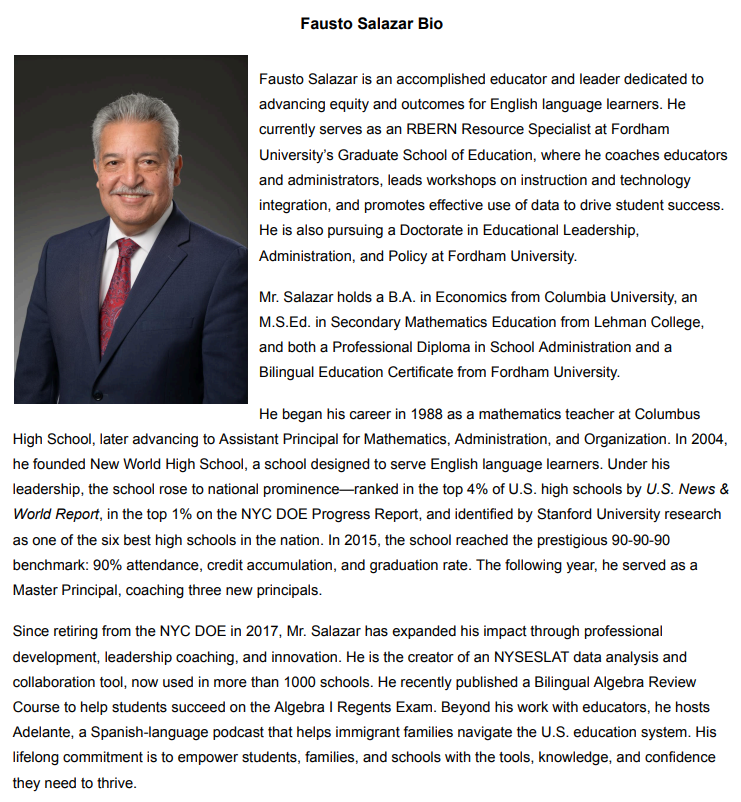
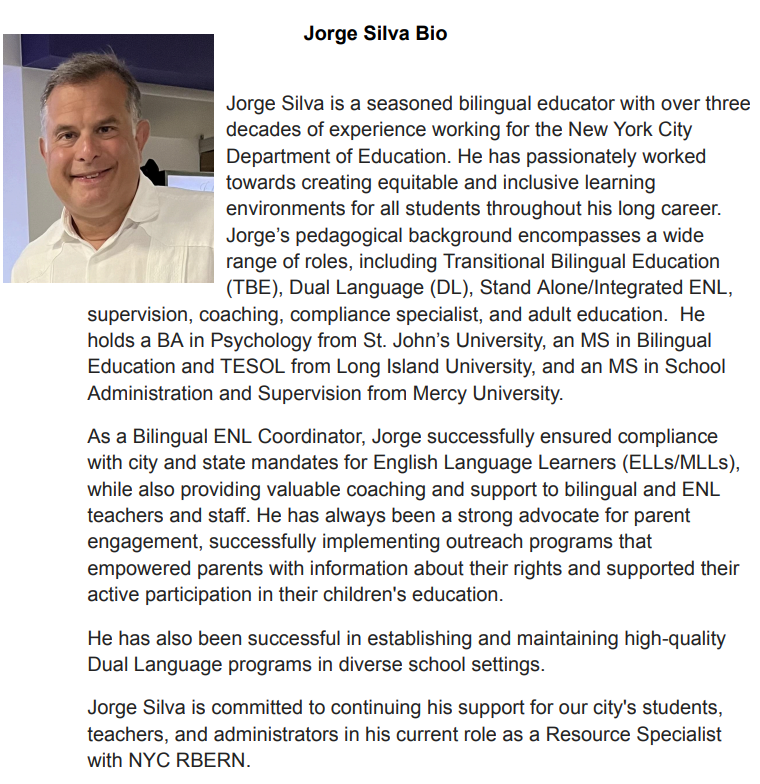
Presenters: Fausto Salazar and Jorge Silva
Workshop Description
Teachers make decisions every day based on what they know about their students, but what if we could bring that knowledge together in a more intentional and powerful way? This session explores how to use multiple data sources to better understand and support multilingual learners across all content areas.
Participants will learn how to move beyond test scores and consider the whole student by combining system data (such as assessments and attendance), classroom data (including student work and engagement), and family and cultural information. Through practical examples and case studies, we will explore how these three data sources work together to inform instruction, promote equity, and build on students’ strengths.
This interactive workshop will provide strategies that are immediately applicable in any classroom, helping educators turn everyday information into meaningful instructional decisions.
Who Is This Workshop For?
- K–12 teachers across all subject areas
- ENL/ESL and bilingual educators
- Special education teachers
- Instructional coaches and school leaders
- Any educator interested in better understanding and supporting multilingual learners
No prior experience with data analysis is required.
By the End of This Session, Participants Will:
- Identify three key types of data: system, classroom, and family/cultural information, and understand how each contributes to a fuller picture of the student
- Apply a data triangulation approach to better understand student strengths and needs
- Use student information to design instruction that supports language development and content learning
- Shift from a deficit-based perspective to an asset-based approach when interpreting student data
- Leave with practical strategies to use data in ways that are meaningful, manageable, and immediately applicable in their classrooms
Location:
A zoom link will be sent to your email the night before the event.
,
PRIORITY:3
TRANSP:TRANSPARENT
BEGIN:VALARM
TRIGGER:-PT5M
ACTION:DISPLAY
DESCRIPTION:Reminder
END:VALARM
END:VEVENT
END:VCALENDAR